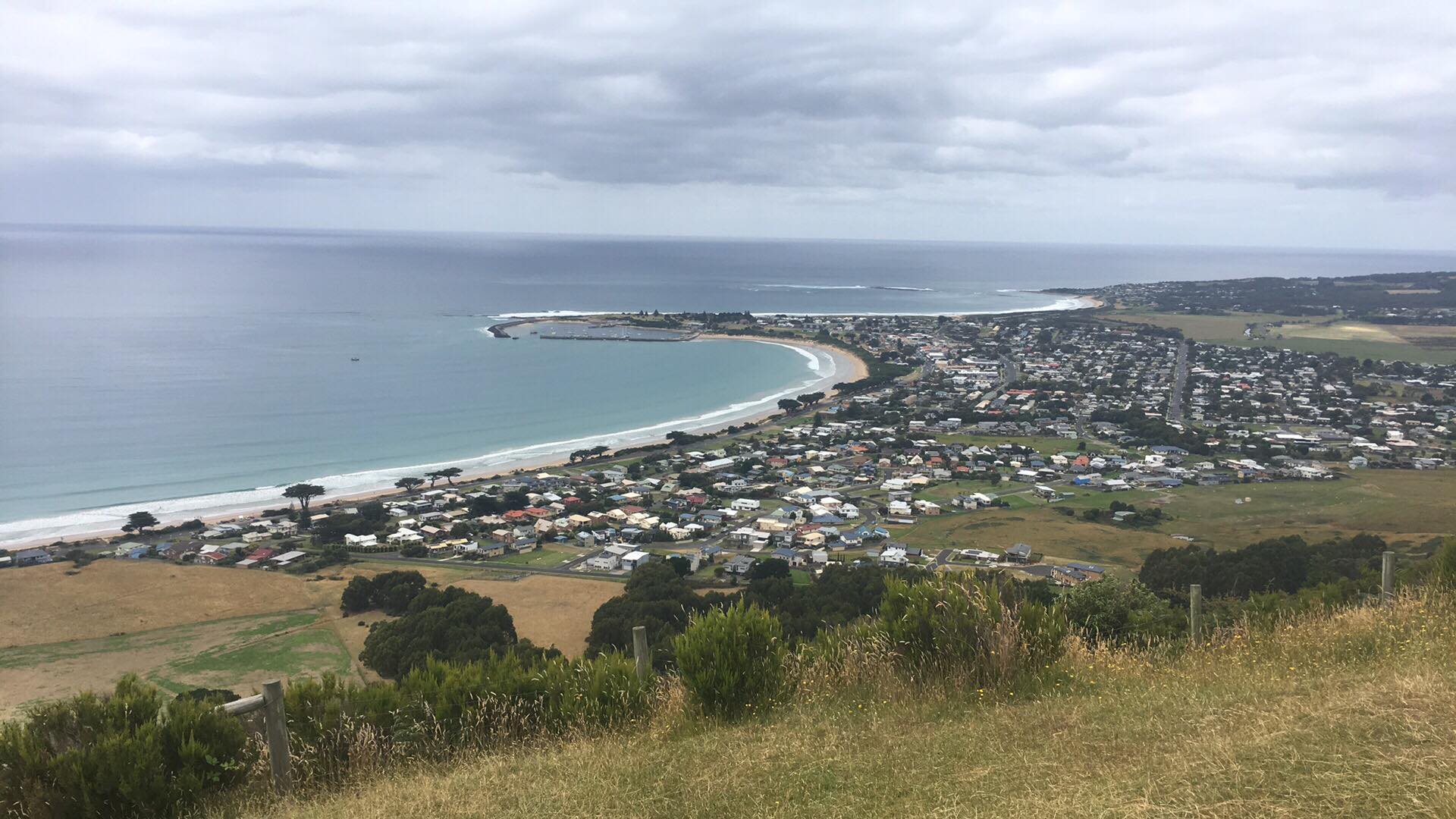
APOLLO BAY MAIN BEACH
In town. About 3 km of east-facing sand curving north from the harbour along the foreshore.
Facing east into the bay means it's sheltered from the south-west swells and winds that batter most of the coast. That's why it's the one beach on this stretch you can usually swim at.
- SWIMMING
- The southern end near the harbour is the safest, with a continuous shallow sandbar and few rips. Rips get bigger and stronger the further north you walk, so pick your spot at the harbour end.
- SURFING
- A gentle sand-bottom beach break that needs a south-west swell to wrap into the bay. The best place around to learn, and often the cleanest wave on the coast when everywhere else is blown out.
- GOOD TO KNOW
- Patrolled by Apollo Bay Surf Life Saving Club (founded 1952) over summer on weekends and public holidays. Swim between the red and yellow flags. Outside those times, nobody is watching.
BeachSafe: Apollo Bay
MARENGO
About 3 km west of town at the end of the foreshore path, and the first section of the Great Ocean Walk.
Just offshore is the Marengo Reefs Marine Sanctuary, Victoria's smallest at 12.5 hectares, declared in 2002. Australian fur seals haul out on the larger island year-round, and you can often watch them from the beach.
- SWIMMING
- Shallow and reef-sheltered near the shore, but with rock shelves and no patrols. Fine for a paddle and the rock pools at low tide. Not somewhere to swim out.
- SURFING
- Reef breaks around the sanctuary for experienced surfers only, plus a smaller inside wave on the right day. Best on a south to south-west groundswell with a westerly wind.
- GOOD TO KNOW
- The seals' island is a Special Protection Area, so access is prohibited. Don't walk out over the exposed reef towards them: fur seals can be aggressive. No fishing or collecting inside the sanctuary. Snorkelling straight off the beach is excellent on a calm day.
Parks Victoria: Marengo Reefs Marine Sanctuary
SKENES CREEK
BEACHSAFE HAZARD 7/10
About 6 km east of town, right beside the Great Ocean Road, with car parks either side of the creek bridge.
A short, south-east-facing beach and the first ocean beach without rock platforms since Lorne. Waves average around 1.5 m, much more than in town.
- SWIMMING
- Treat it with respect. There are strong permanent rips against the rock platforms at both ends, and no patrols. If you're not a confident ocean swimmer, swim in town instead.
- SURFING
- Peaky lefts and rights that pick up far more swell than the main beach. Better with some experience. Best with lighter winds from the north to west.
- GOOD TO KNOW
- Unpatrolled. A good walking beach any time, and a handy check on the way in if the bay is flat.
BeachSafe: Skenes Creek
KENNETT RIVER
About 25 minutes east towards Lorne.
A small beach where the river meets the sea, below one of the best spots on the whole coast to see wild koalas.
- SWIMMING
- Has its own surf life saving club with summer patrols, supported by paid lifeguards in recent seasons. Swim between the flags.
- SURFING
- A rivermouth break over reef and sand. Friendly on small days, best on a south swell with north-west winds. Banks move after big swells.
- GOOD TO KNOW
- Walk up Grey River Road and look up into the gums for koalas. Please don't feed the birds or the wildlife.
Great Ocean Road Coast and Parks Authority: Kennett River patrols
JOHANNA BEACH
About 45 minutes west, off a loop road from the Great Ocean Road inside the Great Otway National Park.
The best-known surf beach west of Cape Otway and the venue for the 1970 World Surfing Championships. 3.6 km long, facing south-west straight into the Southern Ocean, with eight bar and rip systems spaced roughly every 350 m.
- SWIMMING
- Not for swimming. Waves average over 1.5 m, the rips are deep and permanent, and there are no patrols.
- SURFING
- Powerful, exposed beach break with famous lefts and rights. It holds big surf and picks up swell when everywhere else is flat. Experienced surfers only.
- GOOD TO KNOW
- Remote, with patchy phone reception. There's a national park campground behind the western end. Never surf it alone.
BeachSafe: Johanna